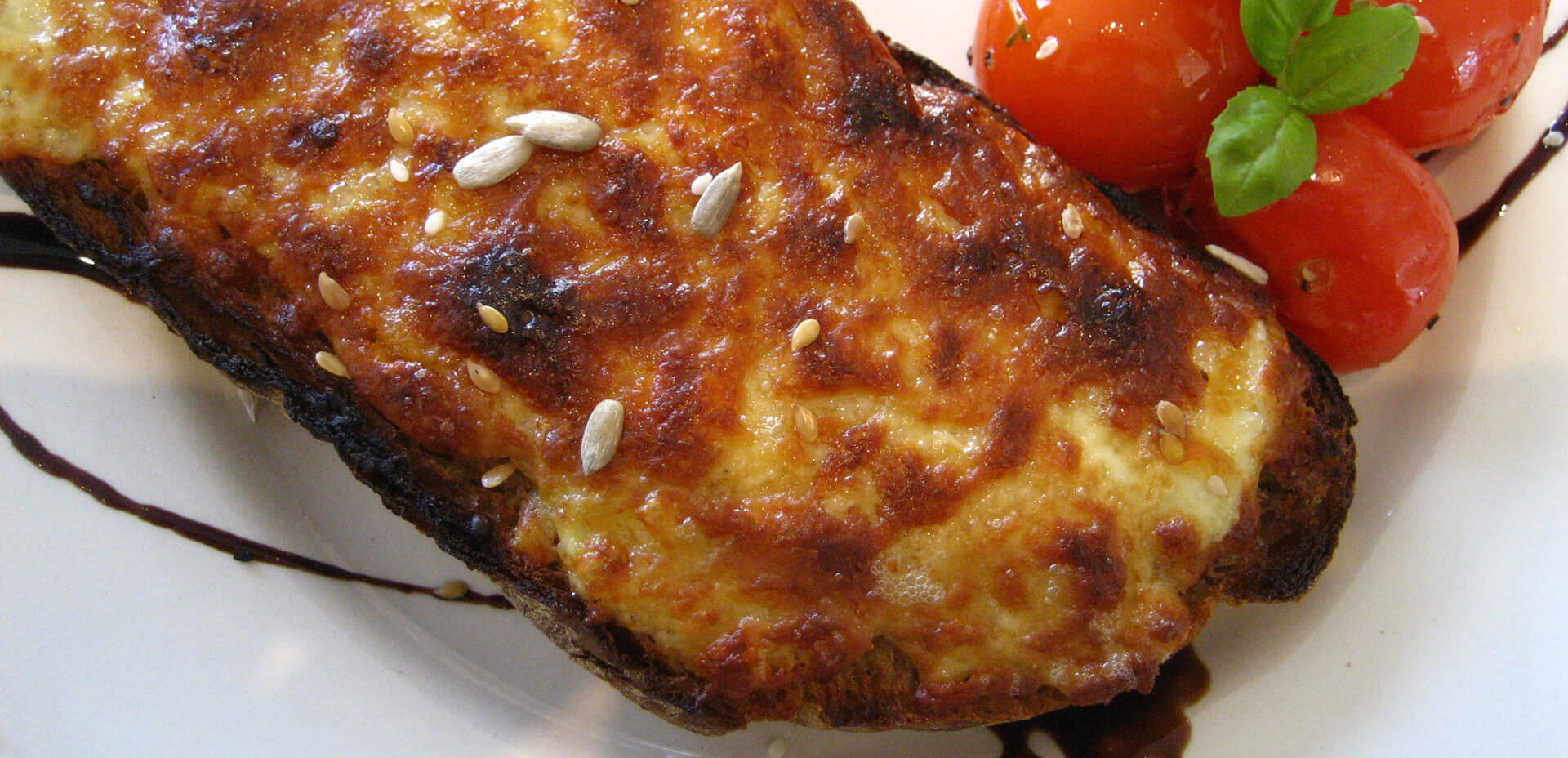
Welsh Rarebit

Welsh Rarebit

Print this recipe


Welsh Rarebit is perhaps the most famous Welsh dish of them all and like Scottish Haggis and Irish Stew you’ll find the world over.

What Is Welsh Rarebit?

Welsh rarebit or Welsh rabbit is a traditional Welsh dish made with a savoury sauce of melted cheese and various other ingredients. It’s served hot after being poured over slices of toasted bread or sometimes served in a chafing dish rather like a  fondue. The names of the dish originate from 18th-century Britain. This simple but very popular dish of toasted bread covered in melted cheese and topped with mustard or spices has been popular since at least the 1500s under the Welsh ‘caws pobi’, which means toasted cheese. Checking back the first recorded reference to this dish is shown in 1725 when it was called ‘Welsh rabbit’.

Welsh Rarebit Recipe

You’ll need:

225g grated, any strong Welsh cheese or Caerphilly cheese

1 tablespoon butter

2 teaspoons Worcestershire sauce

1 level teaspoon dry mustard

2 teaspoons flour

Shake of pepper

4 tablespoons beer, Guiness or milk (Guiness gives a stronger flavour)

4 slices bread toasted on 1 side only

What next?

  1. Put the cheese, butter, Worcestershire sauce, mustard, flour and pepper into a saucepan.
  2. Mix well and then add the beer, Guiness or milk to moisten. Do not make it too wet!!
  3. Stir over a gentle heat until all is melted, and when it is a thickish paste, stop stirring, and swivel it around the saucepan, which it will do quite easily.
  4. Leave to cool a little, and meanwhile toast the bread on one side only.
  5. Spread the rarebit over the untoasted side and brown under a hot grill.
  6. This mixture can be made and kept in the refrigerator for several days if required. Sweet white wine can be used instead of beer and gives a good flavour.

Discover more Welsh food.

More about Welsh Rarebit on Wikipedia.

Discover more Welsh food...

GDPR
Privacy Overview

This website uses cookies so that we can provide you with the best user experience possible. Cookie information is stored in your browser and performs functions such as recognising you when you return to our website and helping our team to understand which sections of the website you find most interesting and useful.