
A Meeting of School Gardens, from Wales to Uganda
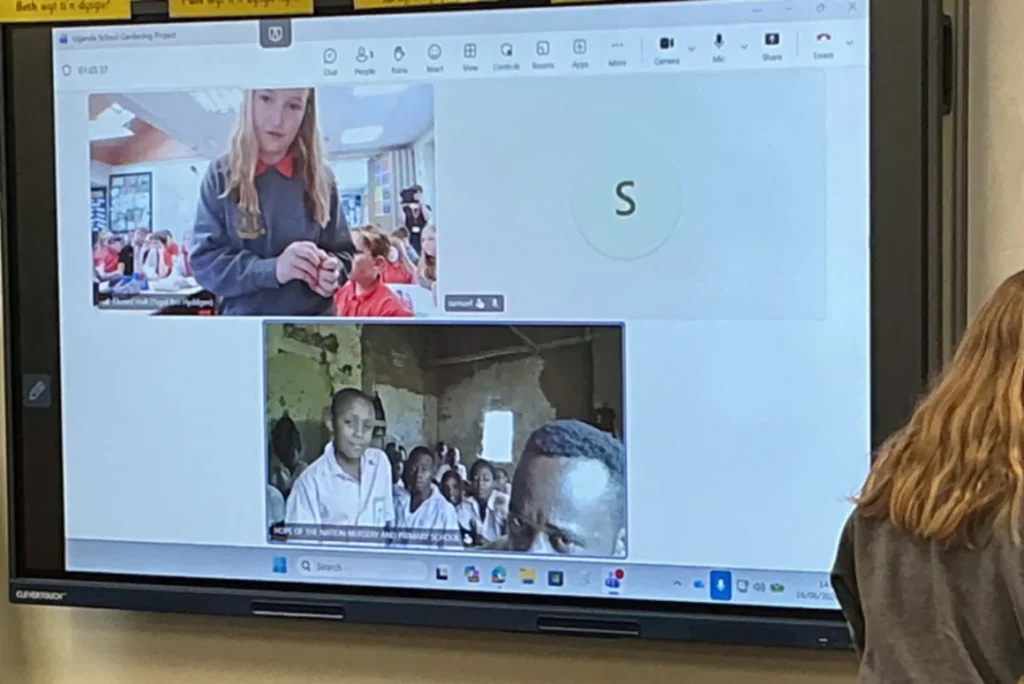
“What plants do you grow?” “Are there wild animals there and is it a problem?” “How do you collect and store water?”
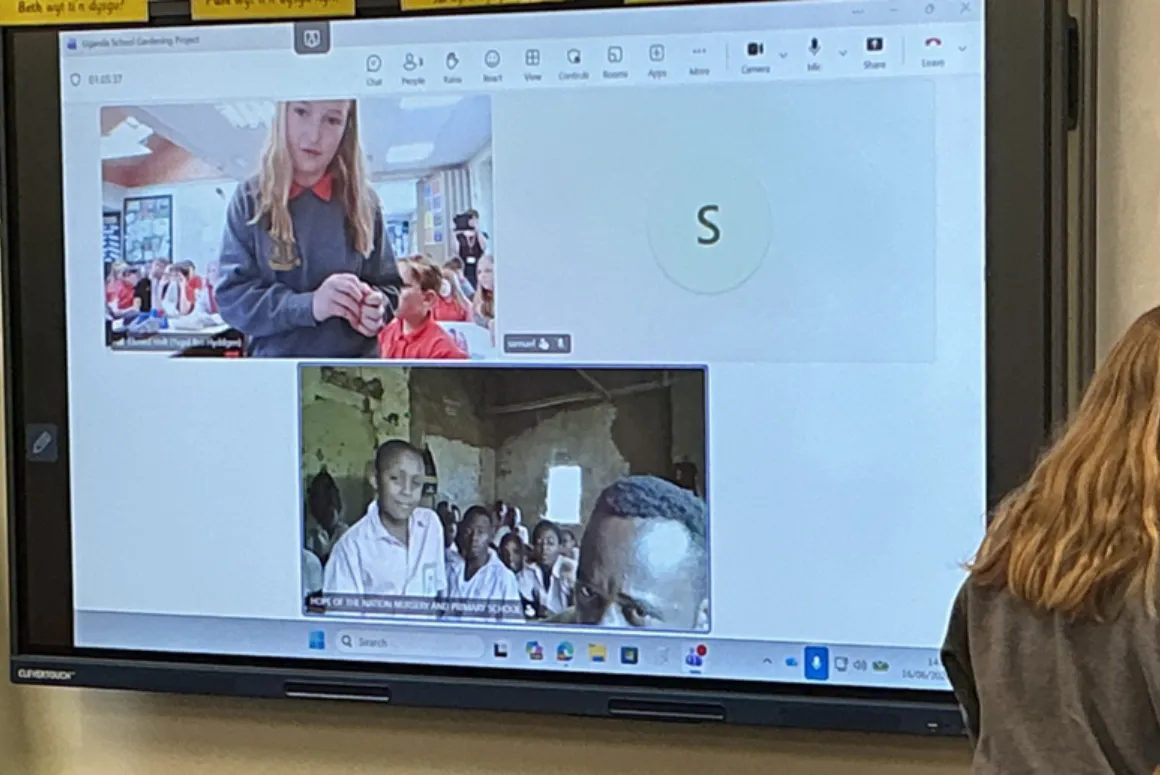
Children from Ysgol Bro Hyddgen in Machynlleth, rural mid Wales, are talking over a Teams link with pupils at Hope of the Nation Primary School in Nakivale, a large refugee settlement in Uganda. The children have been exchanging photos and videos of their school gardens and now they are meeting for the first time.
One by one they step up to the front and address the camera, watching the other class on a big screen. It is moving to hear young voices earnestly discuss the business of food production, trying to imagine gardening in such a different climate, and digest the answers that come back.
There are more similarities than differences. The Ugandan school has a well, while the Welsh one collects rainwater in a butt. One has goats wandering in, the other has to contend with slugs. But they both grow a similar range of crops, love to compost and mulch, and enjoy getting out of the classroom to learn from nature.
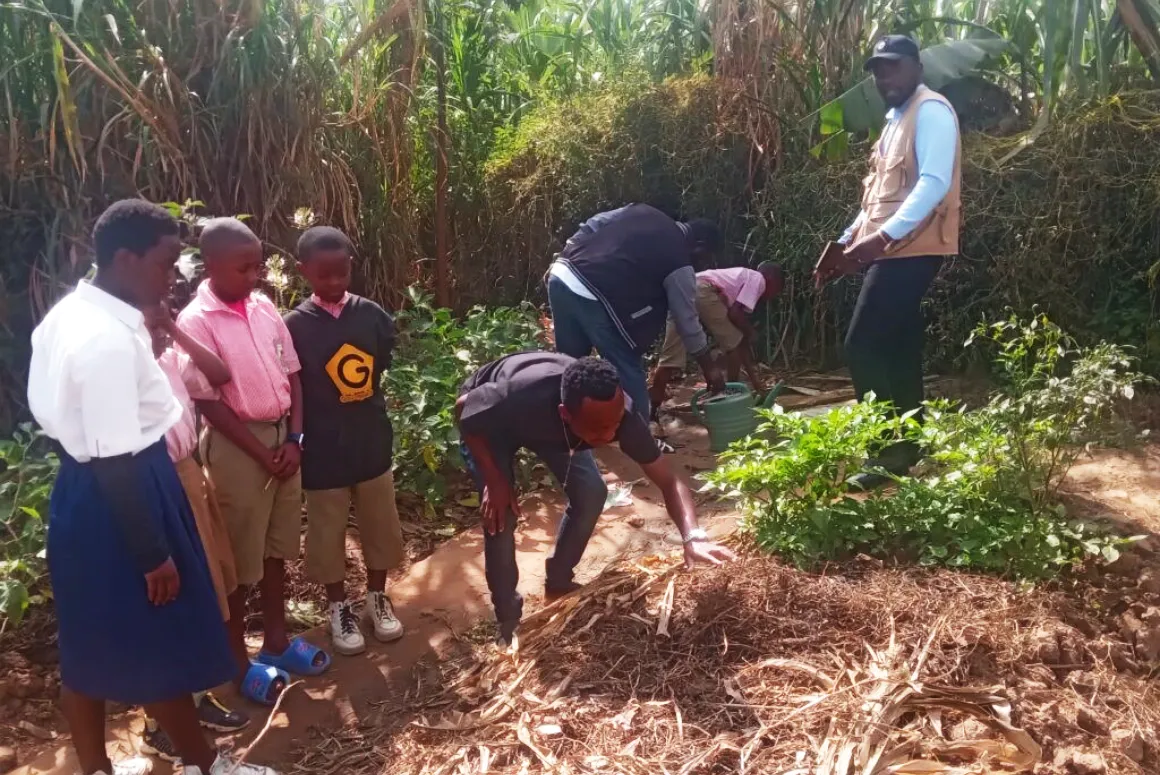
The Ugandan end of the exchange was arranged by Samuel Ombeni, Refugee Youth Advocate at African Youth Integrated for Socioeconomic Development, who is passionate about a community-led approach to food security.
Nakivale, the eighth largest refugee camp in the world, is home to over 171,000 refugees, many from the Democratic Republic of Congo, but also from Burundi, Somalia, Rwanda, Ethiopia, and Eritrea. For decades, its people have relied heavily on agencies such as the UN World Food Programme to support them. But now funding cuts, particularly from the United States, have posed a serious challenge.
“What happens when the safety net is gone? Hunger returns not as a statistic, but as a silent crisis creeping into homes, classrooms, and clinics,” says Samuel, himself a refugee from Congo, in a powerful article which argues for supporting refugees to grow more of their own food at household level, using agroforestry and permaculture techniques centred on a healthy soil.
Today, nearly 70% of the refugee population receives only about US$3 per month as food assistance, while around 20% receive no food support at all,” he explains. “By equipping young people and community members with practical agricultural skills, we can help them become agents of change in their communities.”
He wants to see a network of demonstration gardens where people can learn by doing, experiment with new crops and techniques, and demonstrate the success that will underpin a new movement towards building food security.
Here in Wales we do not have the same pressing need to grow our own crops at home – or not yet. Food arrives via the supermarket in a reliable way, it is relatively cheap and it is taken for granted. School gardens therefore are not really about food security. They are valued more as outdoor classrooms, for well-being, physical activity and the development of practical skills.
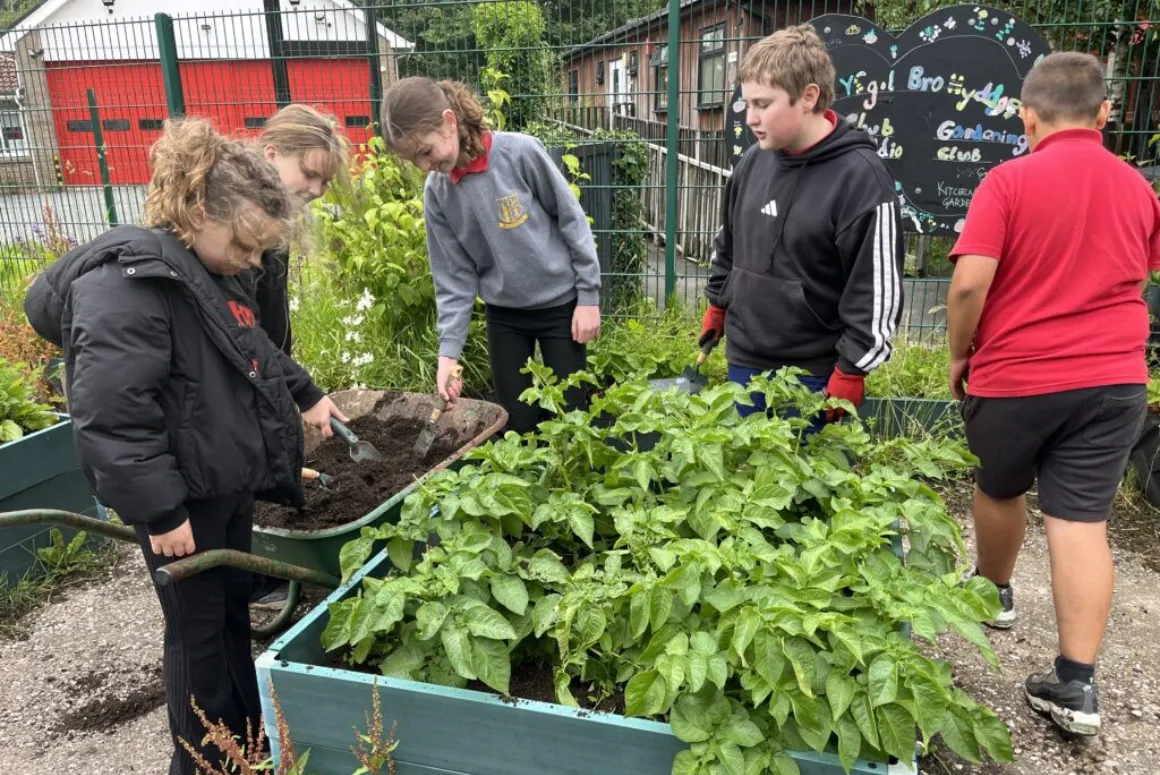
But that could change, as geopolitics and climate change together push food prices up. The Welsh part of the exchange was organised by Edible Mach, a local group dedicated to sharing growing and cooking skills in the community, who are well aware of the fragility of our food system and the importance of food activities in bringing people together.
Even as a much appreciated outdoor activity, school gardening doesn’t get the practical support it deserves. Schemes like Keep Wales Tidy’s Local Places for Nature, funded by the Welsh Government, can help schools get started. But teachers often don’t have gardening skills, and the school day is already crammed with things to do. Externally run programmes like Edible Mach provides, and keen volunteers, are both rare.
The conversation between the two classes is a reminder of the power of teaching children how to grow their own food. What could be a stronger expression of our faith in the future than that we introduce the new generation to gardening? It goes beyond food production and gives them a connection with the soil and the rhythms of nature.
Peas sown before the Easter holidays in March lead to a harvest before the children break up for summer; leeks sown at the same time will run into the next academic year, when perhaps they have left and a new class will harvest them for a St David’s Day meal. Some crops will succeed, some will fail, and so much of it is out of our control. It is a powerful lesson on our place in nature.
For Samuel, schools are only part of the equation. In Nakivale the whole population has to get behind food production, and that is where community demonstration gardens come in, showing refugee farmers how regenerative techniques actually work in their environment.
Again, we have community gardens in Wales as a much valued space for enjoyment of nature and the exchange of skills. They could be the place from which food skills and a healing relationship with nature spreads, as we come face to face with the limitations of modern industrial society. But now, they are still on the margins.
When the call was over, the Welsh children took some time to digest the experience. They were struck by the very different world of the African students – the plain concrete walls and the desks in strict rows, so different from their own informally grouped work areas, fluorescent lighting and walls covered with bright posters – and wanted to know more about their lives. Perhaps also they saw their own gardening efforts in a new light.
For the Ugandan children, Samuel said afterwards, the call had been inspiring.
“Many of these young people have gone through very difficult experiences and seeing people who genuinely value them and believe in their potential touched them deeply… Moments like these help them realize that they are not alone and that their dreams are still worth pursuing.”
The Ugandan children know from personal experience how hard life can be. Most of us here in Wales have not had to face such existential threats, but we can learn from their determination to enjoy what they have, and to keep growing food. As climate change and geopolitics disrupt our lives, maybe global partnerships based on shared humanity can help us find a better way forward.
@janebrynonnen | Food Society © 2026